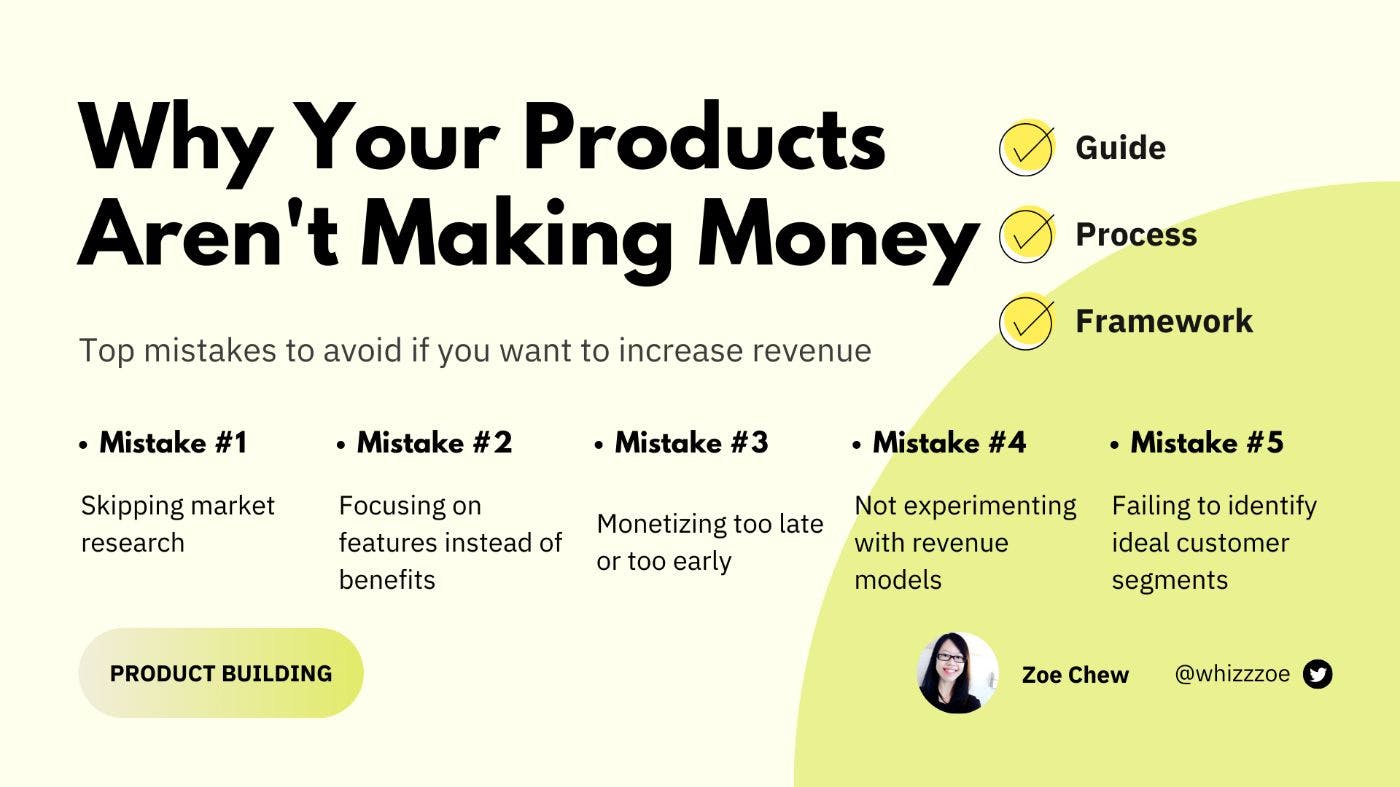
As a , I build things full-time, whether it’s a , or coaching founders to build tech products. For fun, I build , , , , , using my . product builder venture newsletter micro-products AI article tool event app Food app SaaS tracker sneaker app rapid MVP technique This post is one of my series that has been ranked on t 🎉 & . Multi-Part Product Guide HackerNoon Daily TechBea Test Willingness To Pay Create Monetizable Products Internet products often fail to monetize for various reasons. As a full-time product builder for almost 3 years, I've learned valuable lessons from my own failures and successes. Here are some tips I've used to monetize my products profitably: Factor #1: Target market You can't successfully monetize a product unless you know the problem for and WHO you’re creating the solution for. WHO you're solving The consequences of not can seriously impact your revenue. For example: understanding your target market If you don't understand the unique of your target audience, you may not provide the right solution (or feature), or your solution may not resonate with them. pain points and needs Failing to identify the can lead to missed opportunities for revenue and a suboptimal monetization strategy. most profitable customer segments can hurt your chances of monetizing your product. Make sure your marketing channels align with your target customer's behavior, such as their preferred social media platforms, search keywords, brands and influencers they follow, and shopping behaviors. Misaligned go-to-market channels Common mistakes: 🚫 , ignoring market trends and competitor landscape. Skipping market research 😬 and failing to understand their needs, pain points, and preferences. Neglecting customer research [📗 ] Guide: Find Out Willingness To Pay 🙊 …because or . Avoid talking to potential customers “building the product is more important” “I can always fix a bad product with brilliant marketing” Ask yourself: How much revenue do you need to make your business profitable? Do you want to build a $100 million ARR (Annual Recurring Revenue) business or a $1 million ARR lifestyle business? Is your target market large enough to generate the revenue you need? Is it possible to generate enough sales from your target market to reach the estimated revenue? Are people price-sensitive or willing to pay a premium for quality? Factor #2: Value proposition If you are building Internet products, the first thing customers see is NOT the product itself, but to describe it. the words you use A weak value proposition can lead to confusion, lack of interest, lack of conversion or, lack of sales. Because customers simply don’t understand the benefits of your product or why it's worth their money. This is why you need to craft a clear value proposition: that clearly communicates what your product or service offers, how it solves customer problems, and why it's better than other alternatives in the market. A statement Formula for value proposition: FitAI (I made it up LOL) Product name: strength training enthusiasts Helps [target audience]: who want to stay fit but struggle to find time to go to the gym Who are [narrow down the target audience]: get the benefits of a 40-minute workout in the comfort of their own home To [help them achieve a goal]: our at-home smart AI gym device that offers personalized workout sessions With [core differentiator]: Common mistakes: 😱 Focusing on (“nice to have”) rather than what they need (“must-have”) can often lead to creating offerings that fail to generate revenue. selling what customers want 😹 Focusing on . Here’s the truth: Customers don't buy a piece of technology or a product feature; they care if it makes their life easier. features instead of benefits 🌎 Trying to instead of narrowing down your target audience. appeal to everyone 📝 your value proposition over time based on customer feedback. Not iterating Ask yourself: What makes my product unique and valuable? [ ] 📕Guide: Create Valuable Products That Monetize How does my product solve problems more effectively than competitors? What are the core differentiators of my products? How can I create a compelling value proposition? Factor #3: Revenue model When you're building a new product, it's crucial to choose a that fits your target audience. viable revenue model For example, the has been gaining popularity in the e-commerce and Direct-to-Consumer (DTC) industry. subscription-based model It allows companies to generate a recurring revenue stream by offering customers access to their products or services through a . “subscription box” plan But it's important to note that this model isn't suitable for every product category: For instance, durable appliances with may not be a good fit for subscriptions since customers prefer to buy them one time instead of receiving them every month. long lifespans However, products that are , like food and beverages, personal care items, or products that require frequent replenishment, work great with subscription models. You can even offer bundled discounts to keep customers coming back for more and staying loyal to your brand. disposable or consumable Common mistakes: : attempting to charge customers before the product has been properly validated, which can lead to low adoption rates and negative feedback. ☀️ Monetizing too early : waiting too long to implement a revenue model, which can lead to missed opportunities for generating revenue and difficulties in transitioning from a free model to a paid one. 🌅 Monetizing too late with multiple revenue models to find the most suitable one for the product and target audience. 🧫 Not experimenting Ask yourself: What is the cost structure of your business? What are the costs associated with running the business? What revenue models are successful in your industry? (But don’t blindly copy your competitors!) How much do you need to charge to cover your expenses and generate a profit? Is the revenue model scalable as the company grows? [1] Find me on / / HackerNoon👋 Twitter LinkedIn [2] Get my product-building teardown — 🚀 Join my newsletter Also published . here