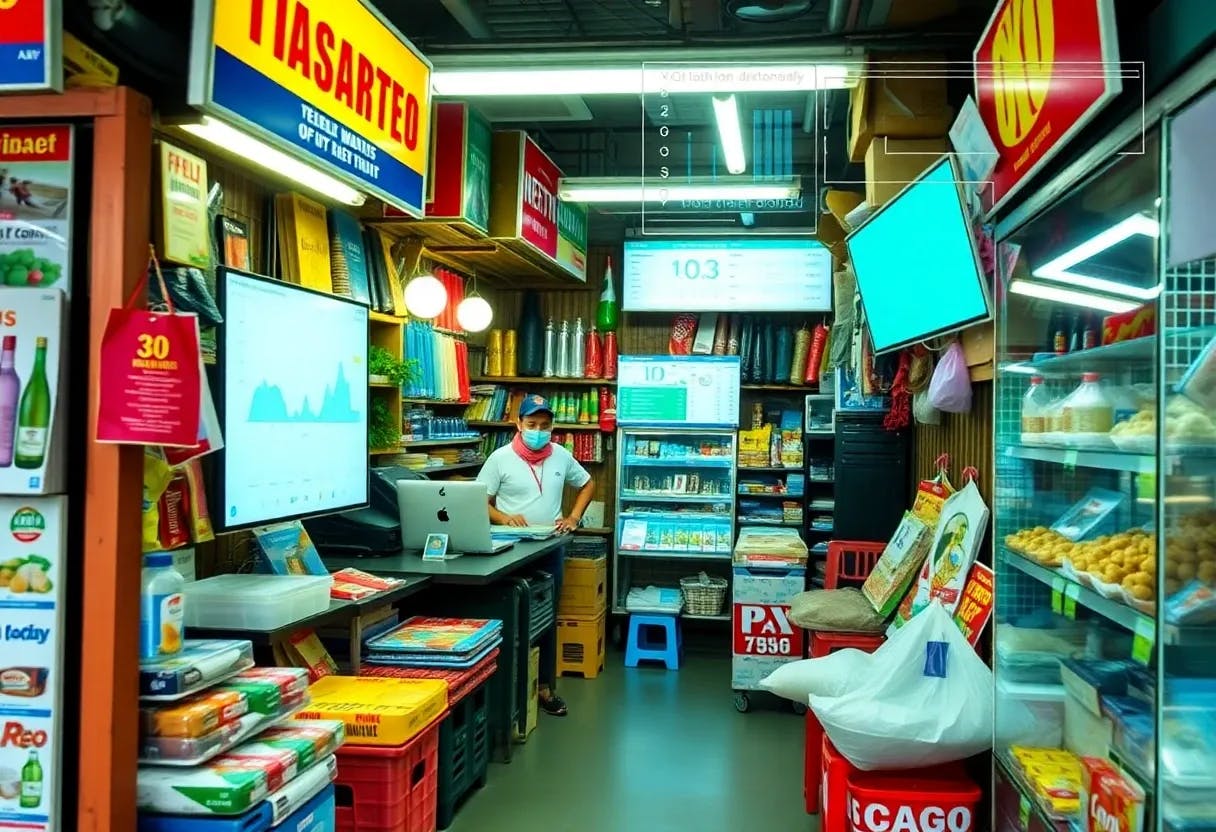
Welcome to the Proof of Usefulness Hackathon spotlight, curated by HackerNoon’s editors to showcase noteworthy tech solutions to real-world problems. Whether you’re a solopreneur, part of an early-stage startup, or a developer building something that truly matters, the Proof of Usefulness Hackathon is your chance to test your product’s utility, get featured on HackerNoon, and compete for $150k+ in prizes. Submit your project to get started! Welcome to the Proof of Usefulness Hackathon spotlight, curated by HackerNoon’s editors to showcase noteworthy tech solutions to real-world problems. Whether you’re a solopreneur, part of an early-stage startup, or a developer building something that truly matters, the Proof of Usefulness Hackathon is your chance to test your product’s utility, get featured on HackerNoon, and compete for $150k+ in prizes. Submit your project to get started! Proof of Usefulness Hackathon spotlight Proof of Usefulness Hackathon spotlight Proof of Usefulness Hackathon Proof of Usefulness Hackathon $150k+ Submit your project to get started Submit your project to get started In this interview, we talk with Nathan Cruz from Packworks, a platform building the operating system for general trade in Southeast Asia. The company is digitizing over 335,000 micro-retailers in the Philippines, enabling FMCG brands to transact and scale within a highly fragmented retail channel. Packworks What does Packworks do? And why is now the time for it to exist? Packworks is building the operating system for general trade (informal trade) in Southeast Asia, digitizing 335,000+ general trade micro-retailers in the Philippines and enabling fast-moving consumer goods brands to transact, market, and scale within a highly fragmented retail channel. Now’s a good time for Packworks to exist because informal trade networks are ripe for digitization to unlock efficiencies in inventory, data visibility, and financial inclusion for micro-entrepreneurs. What is your traction to date? How many people does Packworks reach? Packworks operates the largest digitized sari-sari store network in the Philippines, with over 335,000 active stores nationwide, representing more than 25% of the national market. Sari-sari stores are small, neighborhood general trade stores that serve as essential last-mile retail outlets in Filipino communities, typically operating as family-run micro-enterprises. We process more than 15 million transactions annually across our network of stores, reflecting consistent, recurring usage by micro-retailers, with a presence across 100% of Philippine regions. Who does your Packworks serve? What’s exciting about your users and customers? Packworks creates value for multiple stakeholders across the general trade value chain. At the store level, sari-sari stores and mega-sari stores use the free mobile ERP platform to manage inventory, pricing, and sales while accessing promotions, incentives, and working capital support. For distributors, the platform enables route optimization, indirect reach expansion, and the addition of new buying accounts through electronic route-to-market capabilities. For fast-moving consumer goods brands and manufacturers, Packworks delivers store-level intelligence through Sari IQ and data-driven precision marketing that improves campaign effectiveness and measurable return on trade spend. Notable partners include leading FMCG brands operating within the Philippine market, such as Unilever, FrieslandCampina, and Monde Nissin. At the heart of Packworks’ enterprise is a commitment to helping general trade micro-entrepreneurs reach their full potential. Most recently, the company launched a new AI-powered feature that delivers personalized, hyperlocal insights to store owners. Following data collection in September 2025, Packworks analyzed more than 300 stores in its network over a two-week period and recorded a 46% increase in daily gross merchandise value alongside a 17% rise in total sales during the same period—underscoring significant gains in overall store efficiency and performance. What technologies were used in the making of Packworks? And why did you choose ones most essential to your techstack? Packworks leverages a robust backend primarily built on Python and Kotlin, utilizing a multi-cloud strategy that spans IBM Cloud serverless architecture, AWS, and DigitalOcean. To handle complex data relationships and search capabilities across their vast retail network, the team integrates specialized tools like Neo4j, ClickHouse, and Algolia, alongside Bright Data for data insights. What is traction to date for Packworks? Around the web, who’s been noticing? The platform has processed $272 million in gross merchandise value in 2025, achieving 55% year-over-year revenue growth and facilitating over 15 million transactions. Backed by Asian Development Bank Ventures and featured in Nikkei Asia, Packworks has successfully digitized 25% of the national market, with recent AI initiatives driving a documented 46% increase in daily GMV for pilot stores. Packworks scored a 313 proof of usefulness score (https://proofofusefulness.com/reports/packworks) Packworks scored a 313 proof of usefulness score (https://proofofusefulness.com/reports/packworks) https://proofofusefulness.com/reports/packworks ) What excites you about this Packworks's potential usefulness? What excites us most is the opportunity to digitize Southeast Asia’s most fragmented distribution channels and transform them into measurable, monetizable, and programmable platforms. By converting stores into data-enabled retail nodes, Packworks unlocks real-time visibility, precision activation, and embedded financial services at scale. Beyond marketing optimization, the long-term potential extends into embedded fintech, risk modeling, and regional expansion—positioning Packworks as the operating layer for general trade across emerging markets. Meet our sponsors Meet our sponsors Meet our sponsors Bright Data: Bright Data is the leading web data infrastructure company, empowering over 20,000 organizations with ethical, scalable access to real-time public web information. From startups to industry leaders, we deliver the datasets that fuel AI innovation and real-world impact. Ready to unlock the web? Learn more at brightdata.com. Bright Data: Bright Data is the leading web data infrastructure company, empowering over 20,000 organizations with ethical, scalable access to real-time public web information. From startups to industry leaders, we deliver the datasets that fuel AI innovation and real-world impact. Ready to unlock the web? Learn more at brightdata.com. Bright Data: brightdata.com Neo4j: GraphRAG combines retrieval-augmented generation with graph-native context, allowing LLMs to reason over structured relationships instead of just documents. With Neo4j, you can build GraphRAG pipelines that connect your data and surface clearer insights. Learn more. Neo4j: GraphRAG combines retrieval-augmented generation with graph-native context, allowing LLMs to reason over structured relationships instead of just documents. With Neo4j, you can build GraphRAG pipelines that connect your data and surface clearer insights. Learn more. Neo4j: more Storyblok: Storyblok is a headless CMS built for developers who want clean architecture and full control. Structure your content once, connect it anywhere, and keep your front end truly independent. API-first. AI-ready. Framework-agnostic. Future-proof. Start for free. Storyblok: Storyblok is a headless CMS built for developers who want clean architecture and full control. Structure your content once, connect it anywhere, and keep your front end truly independent. API-first. AI-ready. Framework-agnostic. Future-proof. Start for free. Storyblok: Start for free . Algolia: Algolia provides a managed retrieval layer that lets developers quickly build web search and intelligent AI agents. Learn more. Algolia: Algolia provides a managed retrieval layer that lets developers quickly build web search and intelligent AI agents. Learn more. Algolia: Learn more