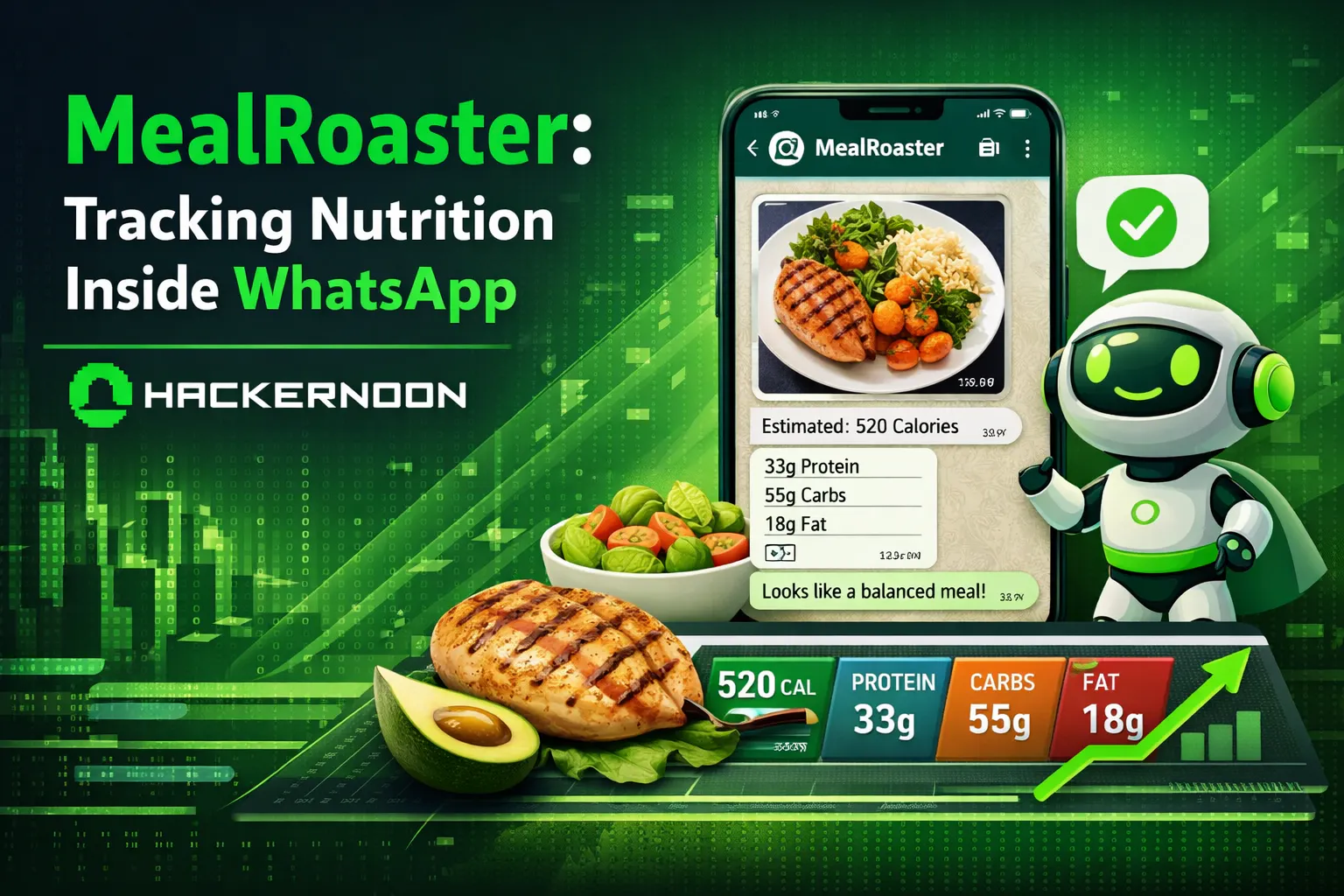

In this interview, we catch up with Ademola Balogun to discuss MealRoaster, an AI-powered nutrition assistant that runs entirely inside WhatsApp. By leveraging computer vision and LLMs, MealRoaster allows users to track calories and macros simply by sending a photo, removing the need for standalone apps. MealRoaster What does MealRoaster do? And why is now the time for it to exist? MealRoaster is an AI powered nutrition assistant that runs entirely inside WhatsApp. Users send a photo of their meal and instantly receive calorie, macro, and health insights without downloading an app. It makes food tracking simple, fast, and part of everyday conversation. Now’s a good time for MealRoaster to exist because user fatigue with complex standalone apps is at an all-time high, and leveraging the ubiquity of WhatsApp allows for a frictionless, conversational approach to health tracking. What is your traction to date? How many people does MealRoaster reach? MealRoaster has 140 free users so far, with around 170 meal analyses completed. Early data shows consistent engagement and strong user interaction within WhatsApp. Who does your MealRoaster serve? What’s exciting about your users and customers? MealRoaster is for busy individuals who want to track calories and improve their nutrition without downloading another app. It is ideal for gym members, weight loss clients, muscle gain enthusiasts, and anyone who wants simple, instant food tracking inside WhatsApp. What technologies were used in the making of MealRoaster? And why did you choose ones most essential to your techstack? MealRoaster leverages AI-powered computer vision and Large Language Models (LLMs) to handle image analysis and nutrition insight generation. The core backend is built on Python, utilizing cloud infrastructure and API integrations to ensure real-time processing and seamless automation within the WhatsApp interface. What is traction to date for MealRoaster? Around the web, who’s been noticing? The project is currently in its early-stage rollout, having onboarded 140 users who have completed approximately 170 meal analyses. While currently focused on validating engagement through repeat usage patterns, the team is actively tracking metrics via internal dashboards and preparing for broader enterprise partnerships. MealRoaster scored a 41 proof of usefulness score (https://proofofusefulness.com/report/meal-roaster) - how do you feel about that? Needs reassessed or just right? https://proofofusefulness.com/report/meal-roaster A score of 41 feels fair for where the product currently sits. MealRoaster is still in its early validation phase, so the goal right now is learning how people naturally interact with nutrition tracking inside WhatsApp. The score reflects that there is clear interest, but also plenty of room to improve retention, feature depth, and scale. As usage grows and we introduce structured coaching insights and B2B partnerships, I expect that usefulness score to move significantly higher. What excites you about this MealRoaster's potential usefulness? What excites me most is the ability to remove friction from nutrition tracking by meeting people where they already are, inside WhatsApp. Most people quit food logging apps because they are tedious, but turning a simple chat into an intelligent nutrition assistant makes healthy decisions easier and more consistent. The potential to support individuals, gyms, and wellness programs at scale without adding complexity is what makes this especially powerful. Walk us through your most concrete evidence of usefulness. Not vanity metrics or projections - what's the one data point that proves people genuinely need what you've built? The clearest signal is repeat usage from early users who consistently send multiple meal photos over several days without any prompting. When someone integrates the tool into their daily routine voluntarily, that is a strong indication that it is solving a real problem. Seeing users naturally return to analyze meals again and again shows that the conversational format lowers the barrier to consistent tracking. How do you measure genuine user adoption versus "tourists" who sign up but never return? What's your retention story? We focus less on sign ups and more on behavioral signals. The main metric we track is how many users analyze more than one meal within a week. Users who submit several meals tend to keep coming back because the process becomes part of their daily routine. Early retention patterns suggest that once a user analyzes their first two or three meals, the likelihood of continued use increases significantly. If we re-score your project in 12 months, which criterion will show the biggest improvement, and what are you doing right now to make that happen? The biggest improvement will likely come from real world integration with gyms, coaches, and wellness programs. Right now we are building the infrastructure to support shared dashboards, progress tracking, and group level insights. That shift from an individual assistant to a tool used inside structured fitness programs will significantly increase the measurable usefulness of the platform. How Did You Hear About HackerNoon? Share With Us About Your Experience With HackerNoon. I first discovered HackerNoon through startup and engineering stories shared within developer communities. Over time it became one of the places I regularly visited to learn about emerging products, AI tools, and early stage experiments. The platform does a great job of highlighting builders who are solving practical problems, which made it a natural place to share the story behind MealRoaster. With 140 registered users and 170 meal analyses, the data suggests that not every sign-up is immediately analyzing meals. How do you plan to bridge that gap and encourage that first interaction? The biggest focus is improving the onboarding experience inside WhatsApp. Many users join out of curiosity but need a small nudge to send their first meal photo. We are experimenting with guided prompts, example meal photos, and short conversational tips that encourage users to try their first analysis within the first minute of joining. You mentioned the potential to support gyms and wellness programs. How does your roadmap for B2B enterprise partnerships differ from your current direct-to-consumer WhatsApp strategy? The direct to consumer version focuses on individuals using MealRoaster on their own inside WhatsApp. They send meal photos, receive calorie and macro insights, and track their nutrition in a simple conversational way. For gyms and wellness programs, the model is slightly different. Instead of analyzing member data or viewing personal meal logs, gyms would offer MealRoaster Pro as a value added benefit for their members. The gym essentially provides access to a powerful nutrition assistant that members can use privately on WhatsApp. This approach lets gyms enhance the overall value of their membership without handling sensitive nutrition data. Members keep full control of their information while still benefiting from an AI powered tool that helps them stay consistent with their fitness and health goals. Given that WhatsApp has UI constraints compared to a native app, how do you handle complex nutritional data display to ensure it remains useful without cluttering the chat? The key is summarization. Instead of presenting large tables of nutritional information, the system focuses on the most relevant signals such as calories, protein, carbs, and fats, along with a short health insight. This keeps the conversation clean while still making the information actionable.