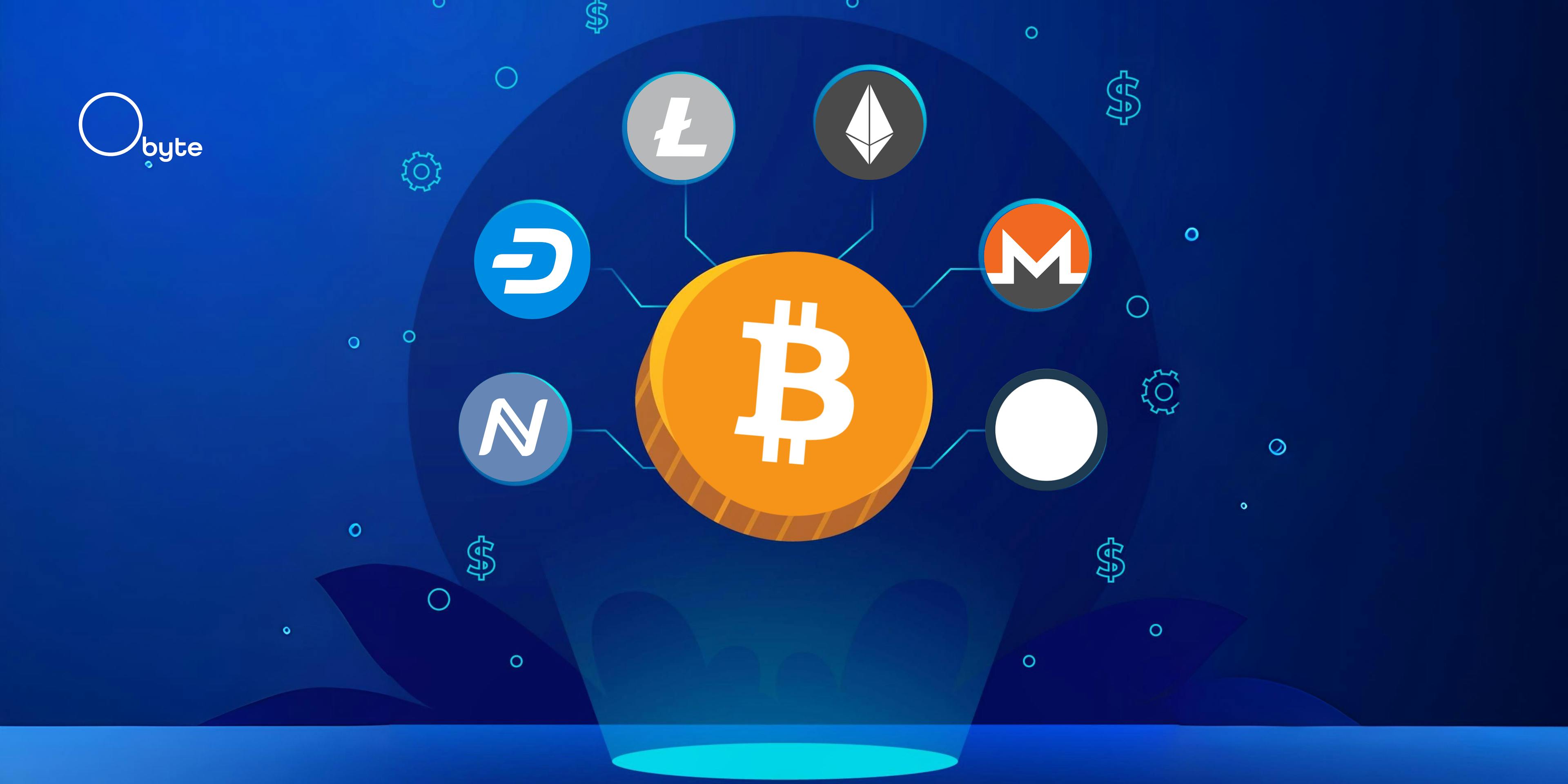
Bitcoin was launched in 2009 with just one mission, as its whitepaper mentions: A Peer-to-Peer Electronic Cash System. That means digital money that could be transferred directly between people, without the need for intermediaries (aka banks or governments). It was the first successful decentralized currency, and it’s still the most popular one. However, it left some doors closed. That’s why altcoins came to exist. “Alt” is short for “alternative,” and that’s what these altcoins came to be, alternatives for Bitcoin. The latter isn’t perfect. We can find on this first blockchain that transactions aren’t fast enough, they’re public for everyone, and functionality beyond payments is limited. Since the Bitcoin code is publicly available to contribute, copy, and modify (that’s what open-source means), developers did just that and created all kinds of alternative versions of cryptocurrencies with new features and structures. “Alt” is short for “alternative,” and that’s what these altcoins came to be, alternatives for Bitcoin. The latter isn’t perfect. Let’s look at the first altcoins, what they tried to do, and if they succeeded. Namecoin Released in April 2011, this is often described as the first altcoin. It reused Bitcoin’s code and design in many aspects, but introduced an important feature: decentralized domains. Users can register their own names/brands in the blockchain’s transaction data. The main goal was to create a decentralized domain name system using .bit domains, so no central authority could ever block or censor web addresses. It reused Bitcoin’s code and design in many aspects, but introduced an important feature: decentralized domains. Besides, to keep their network secure, Namecoin was also the first one to introduce the concept of merged mining. This allowed miners to participate in both Bitcoin and Namecoin at the same time, which reduced competition and incentivized cooperation. To register a domain, users would need their native token (NMC) and a minimal transaction fee. Every name lasts around 222 days without being renewed, and they can be explored through the software ncdns. Namecoin Namecoin This network or their domains didn’t become mainstream, but they’re still standing with constant updates. Bitcoin didn’t implement anything similar, but other chains actually did. Besides Namecoin, you can now register a name on crypto systems like the Ethereum Name Service (ENS), Unstoppable Domains, and Handshake (HNS). Litecoin Even back in 2011, Bitcoin was already being mined with GPUs instead of common CPUs. That raised concerns about the required hardware being a barrier to participation in Bitcoin (which would become true over the years). To address this, some developers copied the Bitcoin code and changed its mining algorithm for something “friendlier” to CPUs and costly to more advanced hardware. This coin was called Tenebrix, but it didn’t survive. Basically, because those developers wanted to keep millions of coins for themselves. was called Tenebrix was called Tenebrix In October 2011, Charlie Lee launched the spiritual and less greedy successor of Tenebrix: Litecoin (LTC). The changes from Bitcoin were modest. Besides the mining algorithm, blocks arrived a bit faster, which made confirmations feel more responsive for payments. Litecoin never claimed to reinvent money, and has instead worked as a testing ground and companion to Bitcoin —which earned it the nickname of “digital silver.” In October 2011, Charlie Lee launched the spiritual and less greedy successor of Tenebrix: Litecoin (LTC). Important Bitcoin updates, like SegWit, were first tested on this network. Over time, Litecoin showed that incremental design choices could support a long-lived network without challenging Bitcoin’s role as a store of value. PoS, Smart Contracts, & On-Chain Governance Smart contract networks and different consensus mechanisms didn’t appear overnight. In August 2012, Peercoin (PPC) was the first altcoin to introduce Proof-of-Stake (PoS), where coin ownership would help to secure the network, instead of computational work and electricity (as in Proof-of-Work systems like Bitcoin). The goal was to reduce energy use and increase sustainability. Peercoin Peercoin A year later, Mastercoin was launching what could be considered the first second-layer system on top of Bitcoin. It offered to create simple tokens and contracts inside this chain. This platform, now known as OmniLayer, was the first one to issue an Initial Coin Offering (ICO), and it was also the technological base for the creation of Tether (USDT). A year later, Mastercoin was launching what could be considered the first second-layer system on top of Bitcoin. It offered to create simple tokens and contracts inside this chain OmniLayer OmniLayer Dash, released in 2014, was likely the first altcoin to experiment with governance. It introduced a treasury funded by block rewards and managed by masternode users’ votes, formalizing decision-making inside the protocol. Dash Dash Then, in 2015, Ethereum was the first network to implement a general-purpose, Turing-complete smart contract platform through the Ethereum Virtual Machine (EVM), allowing developers to build decentralized applications directly on-chain rather than using limited scripting systems. In other words, it was a whole set of building blocks for developers to build anything they could imagine with the available pieces. Then, in 2015, Ethereum was the first network to implement a general-purpose, Turing-complete smart contract platform through the Ethereum Virtual Machine (EVM) This marked a shift. Altcoins were no longer defined by how they improved Bitcoin, but by how far they expanded the idea of what a “blockchain” could support. Privacy Coins Bitcoin may be great for payments, but it also makes every transaction public for everyone. That’s why privacy coins were created. Bytecoin, released in 2012, is considered the first one. By using the CryptoNote protocol, this coin hid sender identities and transaction links through cryptographic techniques like ring signatures (later used in other coins, too). Its main goal was to make digital cash truly anonymous. It’s worth noting that Bytecoin still stands, but some technical hurdles and pre-mining allegations have pushed it to the background. In April 2014, Monero appeared as a fork of Bytecoin’s codebase, keeping CryptoNote while improving transparency of development and emission parameters. Over time, this coin became the best-known example of that early privacy-first branch, showing that some users cared deeply about confidentiality, not just price or speed. Bytecoin Bytecoin In April 2014, Monero appeared as a fork of Bytecoin’s codebase, keeping CryptoNote while improving transparency of development and emission parameters Monero Monero Life Beyond Blockchains Privacy would come hand in hand with decentralization. In a crypto space where miners or “validators” could take over a network with enough numbers, a system to get rid of these last intermediaries had to appear. This is how DAGs arrived. A Directed Acyclic Graph (DAG) is a distributed ledger where transactions link directly to each other instead of being grouped into blocks, removing the need for those who do the grouping, and their power. IOTA, released in July 2016, was one of the first well-known DAG systems. Its Tangle structure removed miners, but for years it relied on a central component called the Coordinator to protect the network from attacks, which meant real decentralization was postponed. A Directed Acyclic Graph (DAG) is a distributed ledger where transactions link directly to each other instead of being grouped into blocks, removing the need for those who do the grouping, and their powe Directed Acyclic Graph Directed Acyclic Graph was postponed. was postponed. Obyte, launched in December 2016, took a different path. This is a multipurpose crypto network with smart contracts, data storage, and payments, where users add their transactions directly to the ledger —erasing the need for miners or “validators”. It also has its own privacy coin, Blackbytes (GBB). Besides, in its latest updates, Obyte introduced on-chain voting, allowing users to participate directly in governance decisions recorded on the ledger itself. Obyte Obyte Blackbytes Blackbytes on-chain voting on-chain voting A Lasting Influence Most early altcoin experiments died, mainly because most of them offered limited technical originality (or they were just Bitcoin copies) and failed to maintain long-term development momentum. Still, their influence lingered. Privacy features became more refined, alternative data structures gained attention, and Bitcoin itself evolved cautiously through upgrades and second-layer systems. Bitcoin copies Bitcoin copies Taken together, the first altcoins functioned as open laboratories. Some faded quietly, others reshaped the ecosystem, and a few ideas fed back into Bitcoin’s orbit. The landscape that exists today is only possible because they were there before, teaching us some lessons on what to build next and how to build it. Featured Vector Image by Freepik Featured Vector Image by Freepik Freepik Freepik